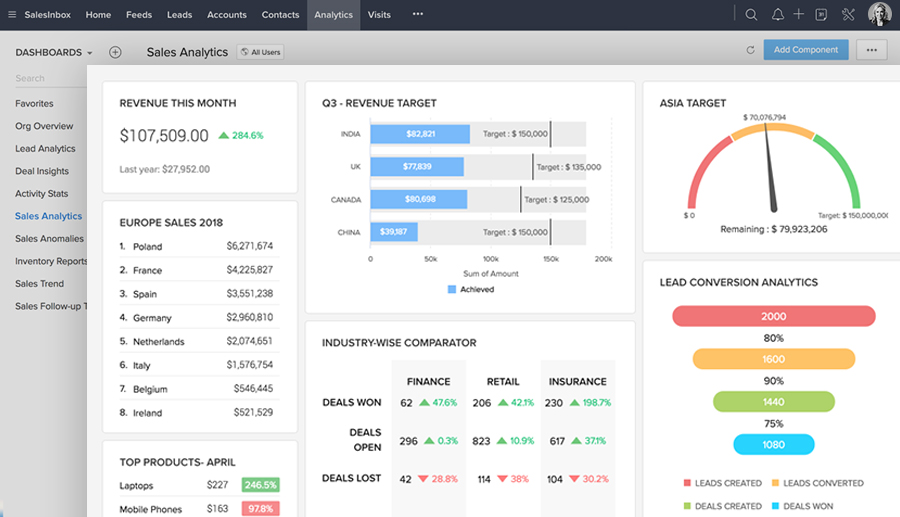
Zoho CRM helps businesses manage customer relationships by tracking leads, sales, and interactions. Calculating its ROI (return on investment) reveals the value gained from costs, showing profits or savings per dollar spent. This process helps assess the tool’s effectiveness, identify improvements, and uncover benefits like higher sales or productivity, especially for small businesses and marketing teams.
This guide provides simple steps to calculate Zoho CRM ROI, using basic math and tools like Zoho CRM analytics. It covers data collection, formulas, and result analysis, incorporating metrics like lead conversion rates and sales growth. Features such as automation and reporting streamline tasks, while costs include subscriptions and training. With practical examples and clear explanations, this guide suits all users. Regular ROI checks optimise Zoho CRM use, aligning it with goals like more leads or faster deals for better decision-making.
This article keeps things straightforward. No need for advanced math skills. Just basic addition and division. Tools in Zoho CRM analytics help pull the data. Start with your goals in mind. What do you want from the CRM? More leads? Faster deals? ROI ties back to these. By the end, you can run your own calculation. Adjust it for your business. Regular checks keep Zoho CRM optimised. This leads to better decisions over time.
What is Zoho CRM ROI?
Zoho CRM ROI measures the financial return from using Zoho CRM. It compares costs to benefits. The result is a percentage. A positive number means the tool adds value. For instance, if ROI is 200%, you get back twice what you spent.
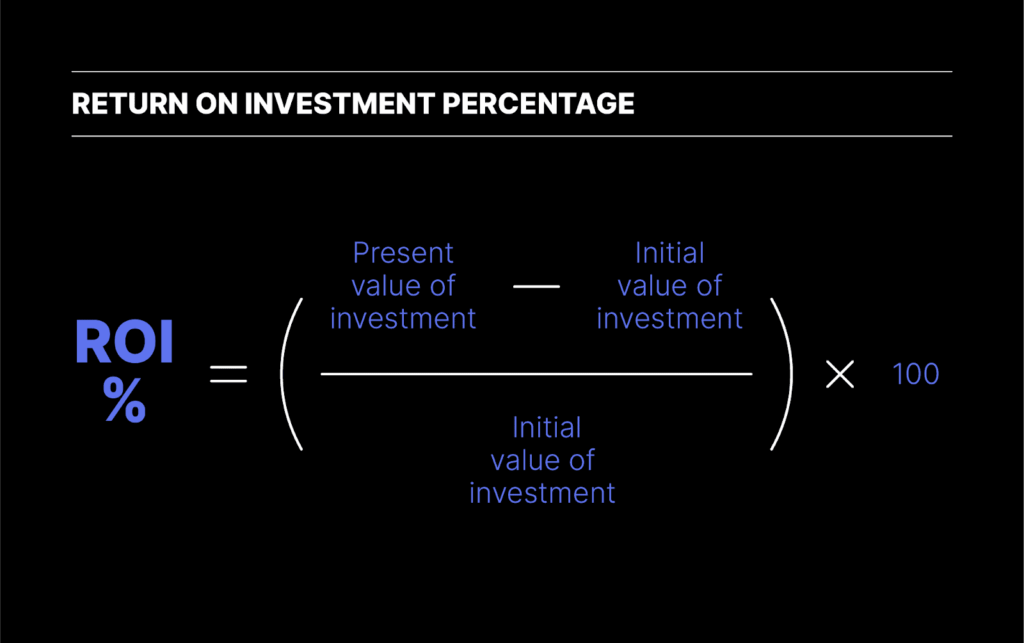
ROI calculation uses a basic formula. Subtract costs from gains, divide by costs, then multiply by 100. This gives the percentage. In Zoho CRM, costs include subscription fees and setup time. Gains cover increased sales and saved hours.
Zoho CRM benefits extend beyond money. Better customer relationships lead to repeat business. Features like marketing automation boost efficiency. Zoho CRM analytics provide reports on leads and deals. These metrics help track progress. Consider Zoho CRM implementation. It involves training staff and migrating data. Once set up, it centralises information. Teams access details quickly. This reduces errors and speeds up work.
Semantic terms like measure CRM success apply here. They show how ROI fits into overall performance. Main keywords include Zoho CRM return on investment. Understanding this helps businesses evaluate tools.ROI is not just about sales. It includes customer satisfaction scores. Higher retention means long-term gains. Zoho CRM for small business often shows quick results due to its affordability.
On average, CRM systems offer a return on investment of $8.71 for every dollar s pent. This comes from research on various CRM platforms, including those like Zoho.
Why Calculate Zoho CRM ROI?
Knowing your Zoho CRM ROI helps make smart choices. It shows if the tool delivers value. Businesses gain clarity on spending. For example, high ROI justifies continued use. Low ROI signals changes needed. One key benefit is spotting inefficiencies. Zoho CRM metrics reveal weak areas. Perhaps lead conversion rates are low. Adjusting strategies can improve this. Sales growth CRM ties directly to ROI. Calculating ROI aids budgeting. See where money goes. Subscription costs versus revenue gains. This supports decisions on upgrades or add-ons. Zoho CRM features like automation save time, which adds to ROI.
Customer relationship management improves with data. ROI calculation includes retention rates. Happy customers stay longer, boosting profits. Businesses with strong CRM see better loyalty. Productivity rises too. Teams spend less time on manual tasks. Zoho CRM performance tracks this through reports. Semantic keywords like business ROI metrics highlight these advantages. For small businesses, ROI proves the tool’s worth. It helps compare with other options. Main keywords such as CRM return on investment guide evaluations. Overall, calculating ROI drives growth. It aligns tools with goals. Regular checks ensure ongoing benefits.
CRM can boost conversion rates by 300%. This statistic shows the potential impact on business operations.
Preparing to Calculate Zoho CRM ROI
To calculate Zoho CRM ROI, first gather all relevant data. List costs like subscription fees, training, and customisations. Then, identify benefits such as sales growth, time saved, and customer gains, using Zoho CRM analytics for accurate figures. Set a time frame, like a year or quarter, for consistent comparisons. Use spreadsheets or Zoho reports to export data on leads and deals. Understand key Zoho CRM metrics, like lead conversion rate, to guide your calculation. Finally, get input from sales and marketing teams to ensure a complete picture of the CRM’s impact.
Step-by-Step Guide to Calculating Zoho CRM ROI
Follow these steps to calculate your Zoho CRM ROI. Each one builds on the last. Use real data for best results.
Step 1: Identify All Costs
Begin by calculating all direct costs for Zoho CRM, starting with subscription fees, which depend on the chosen plan. Include any add-ons, such as extra storage. Next, account for implementation costs, like training sessions and data migration. Factor in indirect costs, such as staff time, by estimating hours spent and multiplying by their wage. Consider additional hardware or software expenses, like new computers for improved performance. Since Zoho CRM implementation may take weeks, include lost productivity during setup. Sum these amounts to determine the total investment.
Example: A small business pays $500 monthly for Zoho CRM. Training costs $2,000. Total yearly cost: $8,000.
Step 2: Measure the Gains and Benefits
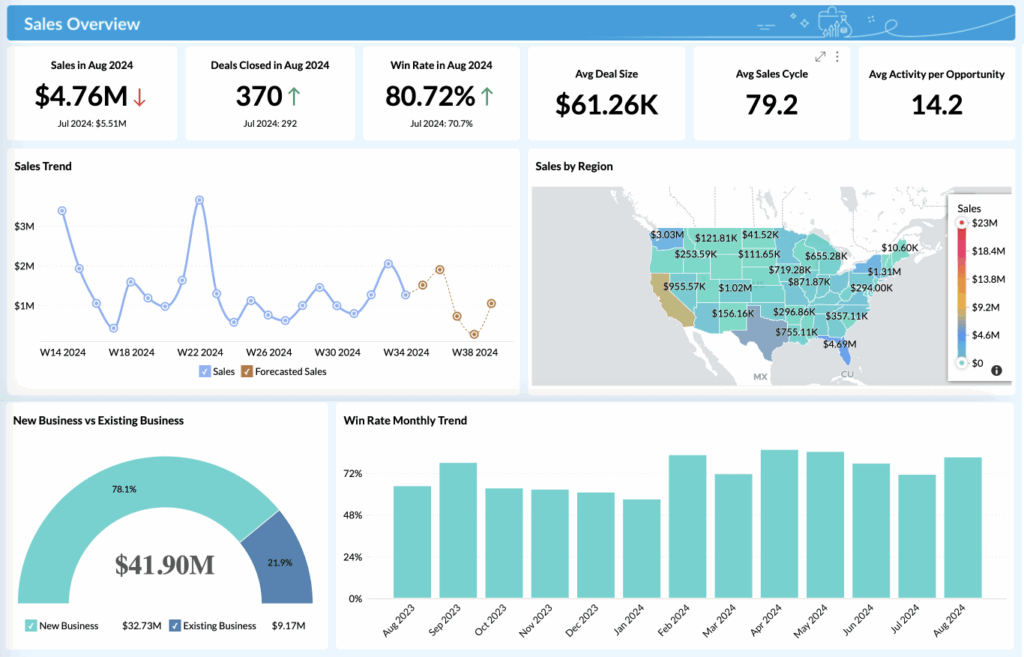
To quantify Zoho CRM benefits, start by measuring revenue increases by comparing sales before and after implementation. Track higher lead conversion rates to see how many leads turn into customers. Calculate time savings from automation by estimating hours saved weekly. Improved customer retention, with fewer lost clients, boosts steady income. Use Zoho CRM analytics to access reports on sales growth and efficiency for accurate data. Include indirect gains, like enhanced team collaboration, which contribute to long-term ROI.
Example: Sales rise by $20,000 yearly. Time saved equals $5,000 in wages.
Step 3: Apply the CRM ROI Formula
To calculate Zoho CRM ROI, use the standard formula: ROI = (Gains – Costs) / Costs * 100. Subtract the total costs (from Step 1) from the total gains (from Step 2), divide by the costs, and multiply by 100 to get the percentage. Plug in your numbers, ensuring gains reflect all benefits and costs are comprehensive. The calculation is straightforward but adjust for your chosen time frame, such as a year or quarter. If the result is negative, it highlights areas needing improvement.
Example: Gains $25,000, costs $8,000. ROI = (25,000 – 8,000) / 8,000 * 100 = 212.5%
Step 4: Analyse and Interpret the Results
Examine the ROI percentage. A high ROI indicates strong Zoho CRM performance, while a low or negative result signals the need for action. Compare your ROI with industry averages, noting that Zoho CRM for small businesses often outperforms expectations. Track trends by calculating ROI quarterly to identify changes over time. If metrics like lead conversion rates are low, adjust strategies to improve them. Use Zoho CRM metrics to refine your approach. Share the results with your team to encourage better use and drive motivation.
Businesses that use CRM saw an increase of 41% in sales revenue. This highlights the potential for growth.
Real-World Example
A marketing firm adopted Zoho CRM with annual costs of $6,000. Their gains included $18,000 in increased sales and $4,000 in time saved through automation, totaling $22,000 in benefits. Using the ROI formula, ROI = (22,000 – 6,000) / 6,000 * 100, they achieved a 266.7% ROI. By leveraging Zoho CRM features like automation and lead tracking, they improved conversion rates. This example demonstrates a practical application of ROI calculation. Adjust the approach to fit your specific business setup and metrics.


Ready to Simplify Your CRM Experience?
Built for growing teams, it offers all the essentials of a CRM—without the complexity or high costs. Start with CRM for Small Businesses Zoho Bigin and experience a smarter, simpler way to boost your ROI.
Tips for Maximising Your Zoho CRM ROI
To boost your Zoho CRM ROI, ensure staff are well-trained with regular sessions to improve usage and proficiency. Customise features to meet your specific business needs, such as leveraging marketing automation for efficient email campaigns. Monitor Zoho CRM performance monthly, using data to make informed adjustments. Integrate Zoho CRM with other tools to enhance overall efficiency. Prioritise key metrics like sales growth to track progress. Encourage team feedback to uncover new benefits and opportunities. These practical CRM tips help ensure higher returns.
Conclusion
Calculating Zoho CRM ROI provides clear insights. It shows the tool’s value in numbers. Follow the steps to get started. Regular calculations keep you on track. Zoho CRM helps businesses grow. With proper use, ROI can soar. Main keywords like calculate Zoho CRM ROI sum up the process.
Apply this guide today. See how Zoho CRM boosts your success.